Wyetech Labs Coral Tube Preamp Revisited
Tip #114
Dick Olsher (September 2026)
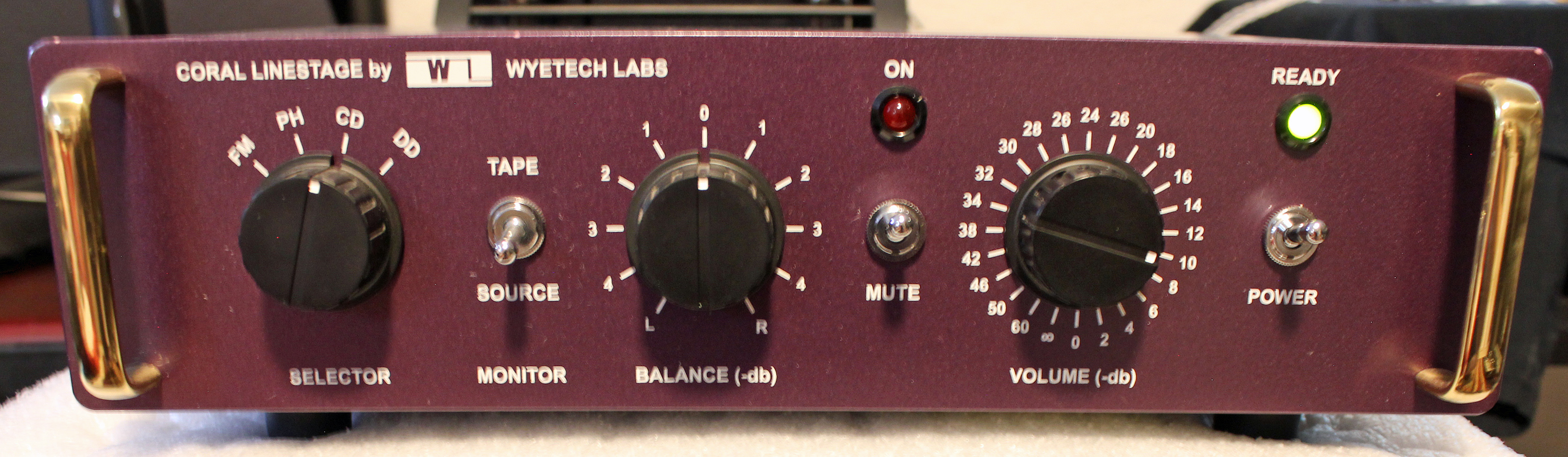
In my estimation, the late Roger Hebert was responsible for some of the finest tube preamps to grace the audiophile landscape. It took him quite a few years to distill much of the flag-ship Opal’s sonic attributes into an affordable entry level product. The Coral was released in 2002, and like all other Wyetech Labs products was only available for sale directly, thereby bypassing middleman markups.
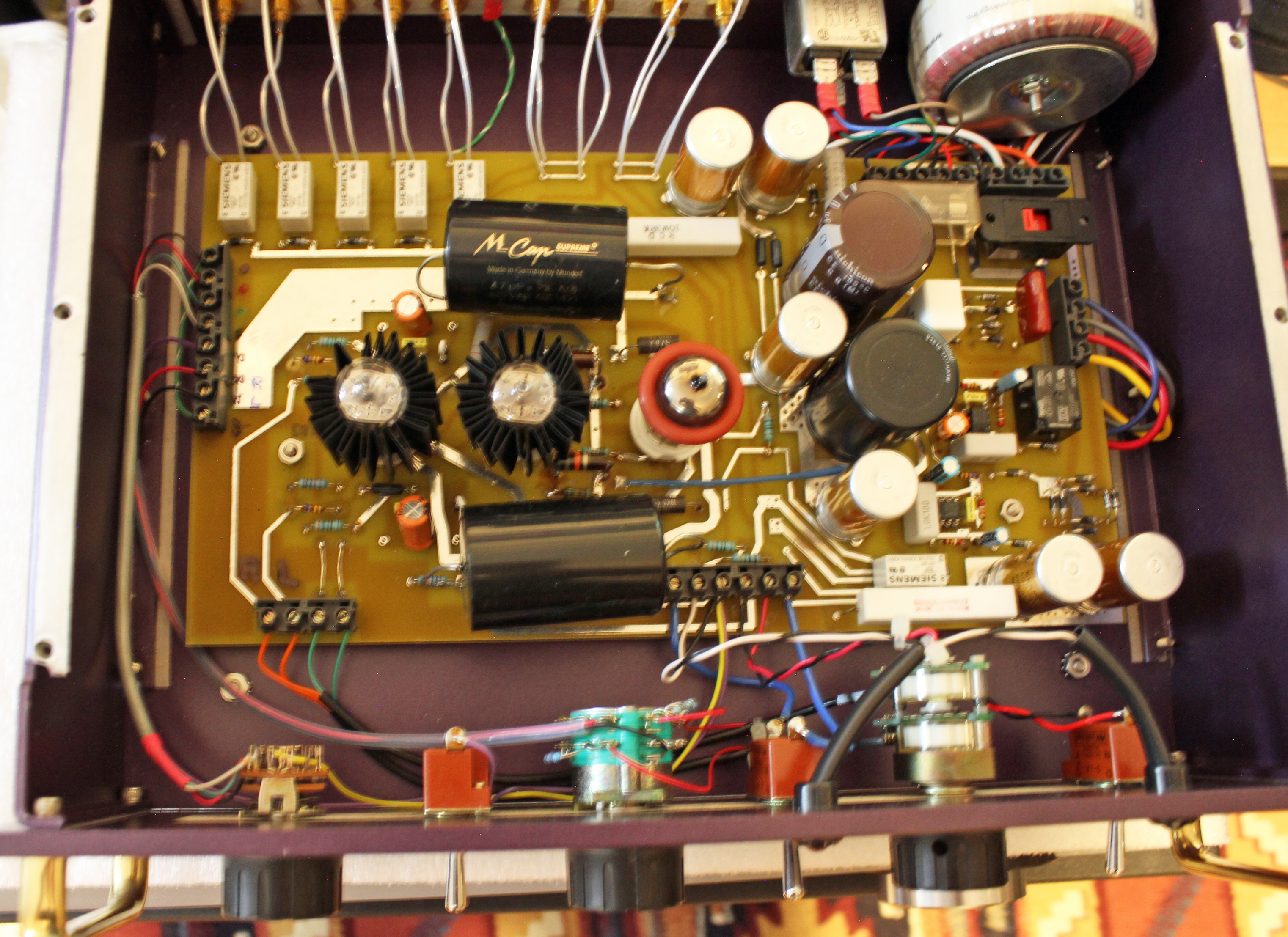
At its core is a grounded-grid gain stage which affords excellent gain at the cost of low input impedance and high-output impedance. Therefore the gain stage was bracketed by cathode followers to increase the input impedance to 50 kOhm and reduce the output impedance to 150 Ohm. The tube complement consisted of a pair of 5814A/12AU7 triodes and a single 5687 dual triode.
The Coral is not your typical entry level product; it is full of nice upscale touches. The Danish ELMA stepped attenuator (24 steps from -60 to 0 dB) uses 0.1% precision metal-film surface mount resistors and represents a big enhancement over a common Alps conductive plastic pot. There is even an 11-position channel balance control for +/- 5 dB adjustment in 1 dB steps. A toroidal power transformer reduces magnetic field radiation to surrounding components. A Pi RC filter is used for the 250 Volt plate supply and a dual Pi RC filter is used for the 12 Volt filament supply. The gain is selectable via an internal jumper between 12.5 dB and 4.5 dB, the low-gain setting being most suitable for digital sources. And I appreciate the front panel handles, nowadays seen as a retro touch but to my mind serves as a useful ergonomic feature.
An important design aspect is the direct coupling of the triode sections which eliminates coupling caps. Most high-end preamp designs rely on expensive coupling caps to maintain sonic excellence. I think that we can all agree that the best cap is no cap at all. The only cap in the signal path is a DC blocking cap at the output, a 10 uF Solen metalized poly cap, which while of decent quality is not ideal. A worthwhile mod involved replacing the Solen caps with Mundorf MCap® SUPREME Classic Silver-Oil 4.7 uF types.
The MCap® mod improved soundstage transparency and image focus, but the biggest sonic gain was due to a wholesale replacement of the tube complement. The tubes I inherited were totally comatose, unable to produce much in the way of a dynamic range. The pair of 5814As were replaced by RCA clear-top12AU7s. The Sylvania 5687 was ditched in favor of a “bronze plate” RCA type which is capable of generating astonishing dynamic gradations.
At the end of this journey I was left with an enjoyable line stage and an excellent example of modern tube sound. The Coral projects a neutral tonal perspective free of thick tube euphonics and consequently does a superb job of preserving the integrity of tonal colors. Midrange textures are imbued with sufficient sweetness to satisfy even an old timer such as me. It offers a clear window onto the soundstage and is able to resolve complex orchestral passages. The lower midrange is surprisingly robust and projects a convincing orchestral power range. To be sure, it isn’t perfect at the frequency extremes. The treble is a bit grainy and it could use a bit more bass control. But overall, the Coral represents quite a testament to the genius of Roger Hebert.